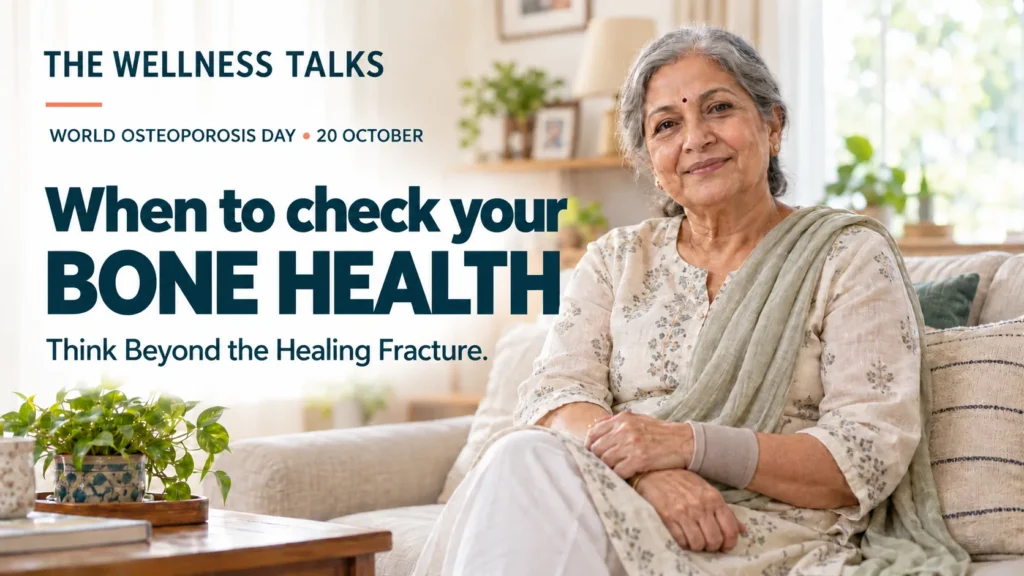
A broken bone after a fall from standing height can be a reason to assess bone health, especially in an older adult. Healing the injury is essential, but the follow-up should also consider whether weakened bones contributed and what could reduce the chance of another fracture.
World Osteoporosis Day falls on 20 October. For many families, the most useful way to mark it is to revisit an injury that has already happened. Was there a discussion about bone strength after the wrist healed? Did anyone review a parent’s height loss or explain what the next bone-health appointment was for?
Those questions can turn an awareness date into a practical conversation.
Bone loss often develops without an obvious warning
Osteoporosis reduces bone strength and makes fractures more likely. It often causes no symptoms before a bone breaks. Fractures commonly involve the hip, spine or wrist, and some vertebral fractures cause back pain, height loss or a change in posture.
That quiet course makes “I feel fine” an unreliable way to judge bone strength. It also means pain is not required before someone can discuss their risk.
A low-impact fracture does not prove that every patient has osteoporosis. The nature of the injury and the person’s medical history still matter. It does, however, provide a reason to ask whether further assessment is appropriate rather than assuming the incident was only bad luck.
For families, it can help to keep two questions separate: “Is this fracture healing?” and “Why did it happen so easily?” The first may be answered during orthopaedic follow-up. The second may need a broader medical review.
Who should raise the subject with a clinician
Age, menopause, a family history of hip fracture, some medical conditions and certain long-term medicines can affect osteoporosis risk. Men are also affected. Prolonged glucocorticoid use is one medicine-related reason to discuss bone protection.
Bring your actual medication list rather than trying to decide which prescription is responsible. A medicine may be necessary even when it affects bone health, and stopping it without advice can create another problem.
Screening recommendations differ between countries and patient groups. A clinician can explain whether testing is appropriate based on your age and risk factors. Assessment after a suspected fragility fracture also serves a different purpose from routine screening in a person with no known injury.
You do not need to arrive with a diagnosis. A precise question is enough: “I broke this bone after this kind of fall. Does that suggest I should have an osteoporosis assessment?” Describe earlier fractures too, including injuries that happened years ago and no longer hurt.
What a bone density scan can tell you
A central DXA scan measures bone mineral density, commonly at the hip and spine. It can help identify low bone density and contribute to decisions about fracture risk and treatment. The result is interpreted alongside the person’s clinical history.
Many postmenopausal women and men aged 50 or older receive a T-score, which compares their bone density with that of a healthy young adult. Younger adults are generally assessed using a Z-score, which compares with people of similar age. A score should not be interpreted without considering which comparison applies.
Ask for the result in language that connects it to care. “What does this mean for my chance of a fracture?” is more useful than memorising a number without understanding its significance.
A scan also does not explain every contributor to risk. The clinician may review other conditions or order tests to look for causes of bone loss. The useful outcome is a plan, not simply a report filed away after the appointment.
Food supports bones but does not replace an assessment
Calcium is needed for bone health, and vitamin D helps the body absorb it. Food sources of calcium include milk, yoghurt, calcium-fortified drinks and some tofu products. Check labels because products differ.
For an Indian household, the practical starting point might be a review of how often suitable calcium-containing foods appear in ordinary meals. For someone avoiding dairy, it might be checking whether the plant-based drink they buy is actually fortified. The aim is to identify a regular source, rather than assume every drink sold as a milk alternative provides the same nutrients.
Supplements may help when food intake does not meet a person’s needs, but more is not automatically better. Calcium supplements can interact with medicines, and excessive intake can cause harm. Discuss the amount needed rather than combining several products with overlapping ingredients.
An osteoporosis plan may also require prescribed treatment. A supplement purchase should not quietly replace the follow-up recommended after a fracture.
Exercise needs to suit the person and the bones
NIAMS recommends a combination of weight-bearing activity, muscle-strengthening exercise and work on balance. These address different needs: loading the skeleton, improving strength and reducing the likelihood of a fall. Walking can be part of the plan, but it does not cover every component.
Someone with osteoporosis, a recent fracture or other physical limitations should discuss safe activity with a healthcare professional. Rehabilitation can help identify a starting level and movements that need adjustment. Copying an intense exercise video may be inappropriate when the person’s fracture history is unknown.
A useful appointment question is: “Which movements should I practise, and which should I change while I recover?” Ask for a plan you can carry out in the space and time available to you. If instructions are unclear, request a demonstration rather than guessing later at home.
The goal is to support safe movement and confidence. Becoming so afraid of another fall that all activity stops can make everyday life smaller without resolving the reasons for the original injury.
The home environment deserves attention too
Fracture prevention also includes reducing fall risk. CDC advises removing trip hazards, improving lighting, adding suitable grab bars and stair rails, reviewing medicines that cause dizziness or sleepiness, and attending to vision.
Walk through the home with the person who lives there. Ask where they feel unsteady. A loose mat beside the bed or a poorly lit route to the bathroom may matter more than a general instruction to “be careful.”
Make changes with the person’s agreement. Moving every familiar object without explaining why can create confusion. It is often more useful to solve a specific difficulty together, such as providing a reliable support near a step or keeping a frequently used item within easy reach.
If there have been repeated falls, bring that history to the clinician even when no bone has broken. The pattern may deserve assessment before another injury happens.
Leave the next appointment with a clear plan
Treatment decisions depend on overall fracture risk, test results and individual health factors. Some medicines slow bone loss; others help build bone. The appropriate choice, duration and follow-up require clinical assessment. Ask before stopping or delaying a prescribed osteoporosis medicine.
Before leaving, establish who will review your results, whether treatment is needed and when the next appointment should happen. If one service treated the fracture and another will assess bone health, find out how the handover works.
This is an editorial recommendation about organising care: a plan becomes more useful when a patient knows the next action and who is responsible for it. A healed wrist and a completed bone-health review are different milestones.
Practical takeaways
After a fracture caused by a small fall, ask whether bone strength needs assessment. Build prevention around the person’s clinical risk, suitable nutrition, safe exercise and fall prevention. World Osteoporosis Day is a reminder to start that conversation before another injury makes it urgent.
Frequently asked questions
Can osteoporosis be present without pain?
Yes. It can remain symptom-free until a fracture occurs. Feeling well does not establish that bone density is normal.
Does a wrist fracture always mean osteoporosis?
No. The injury mechanism, age and other factors matter. A fracture after relatively minor trauma is a reason to ask about an assessment.
Do men need to think about bone health?
Yes. Osteoporosis also affects men, particularly with increasing age or relevant medical risk factors.
Can a DXA scan replace the medical consultation?
No. Its findings should be interpreted alongside fracture history and other risk factors so that the result leads to an appropriate plan.
Is walking enough to protect bones?
Walking can help, but a suitable programme may also include resistance and balance exercises. Get personalised guidance if you have osteoporosis or a recent fracture.
Can calcium tablets replace osteoporosis treatment?
No. Meeting nutritional needs and treating a high fracture risk are related but different tasks. Discuss both with the clinician.
References
- World Osteoporosis Day official campaign and events
- NIAMS, Preventing Another Broken Bone
- NIAMS, Osteoporosis overview
- NIAMS, Bone Mineral Density Tests
- NIAMS, Osteoporosis Diagnosis Treatment and Steps to Take
- NIH Office of Dietary Supplements, Calcium consumer fact sheet
- NIAMS, Exercise for Your Bone Health
- CDC, Preventing Falls and Hip Fractures
Sources checked on October 2026. Educational information; diagnosis, exercise restrictions and treatment should be individualised by a qualified professional.